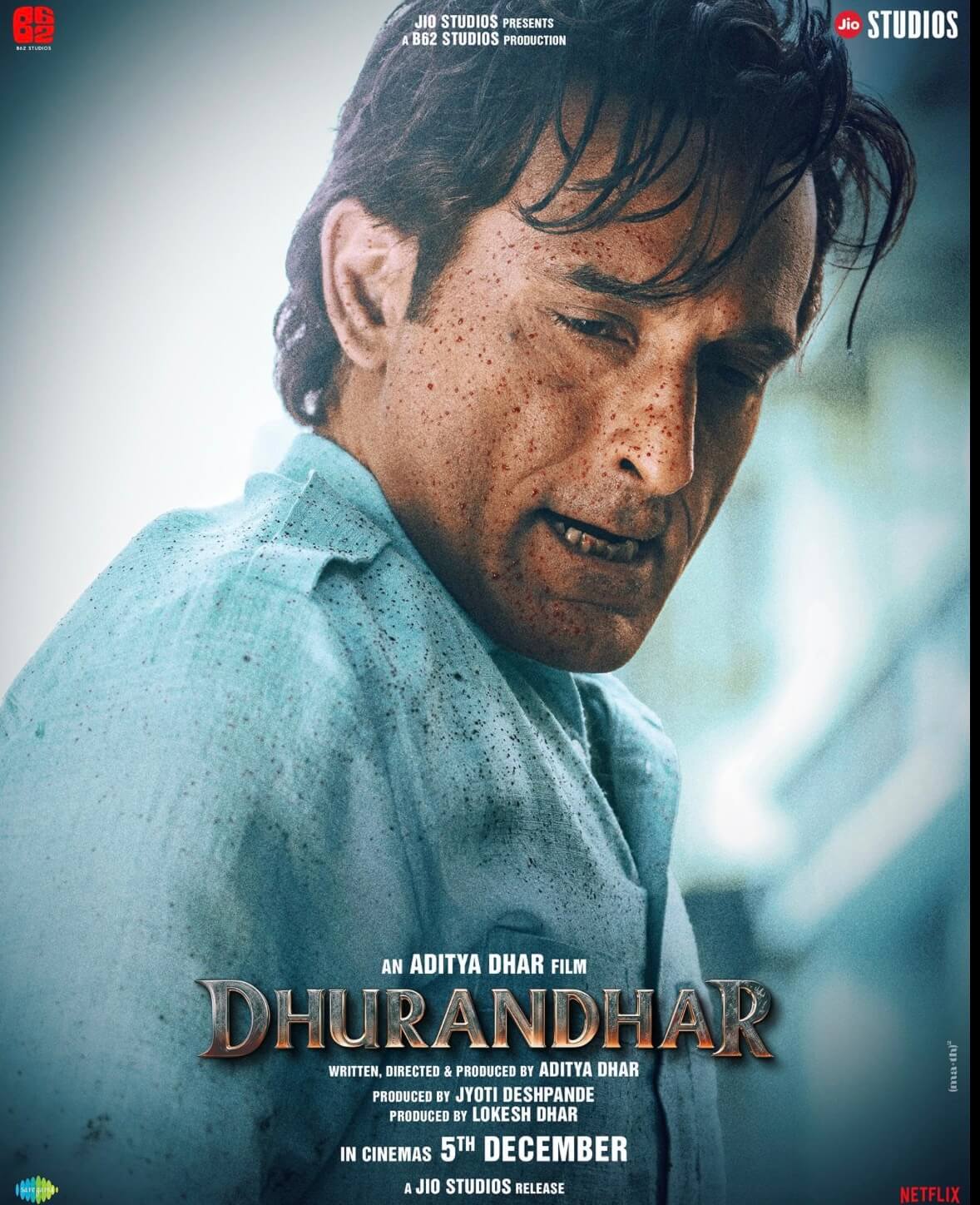
🧠 My Thoughts and Feelings:
This film doesn’t spoon-feed the audience. It assumes maturity and awareness. The storytelling is restrained, serious, and intentionally uncomfortable. Unlike glamorous spy films, Dhurandhar focuses on patience, fear, silence, and moral compromise.
What stood out most is that the film is less about heroism and more about burden — the burden of secrecy, isolation, and decisions that will never be acknowledged publicly.
Hamza’s Role – Why the Silence Matters
If you know too much about an agent’s personal motivations, the operation has already failed.
Hamza is not meant to be understood emotionally — he is meant to be used strategically, which is exactly how intelligence agencies operate.
At the same time, the film leaves important questions unanswered, especially regarding Hamza’s character and the intelligence framework, which feels intentional rather than accidental.
Who Is Rehman, Really?
Rehman is a constructed contradiction — and that’s what makes him dangerous.
He is Cruel, Familial, Loyal, Power-hungry, Ideological, Emotionally hollow.
These traits don’t cancel each other — they coexist.
Rehman is terrifying because he is emotionally coherent, he believes in what he does and he has already sacrificed his humanity
He is not evil because he enjoys cruelty — he is evil because he sees cruelty as necessary.
That’s the most dangerous kind of man.
🌟 Highlights:
•Strong, grounded writing rooted in real history
•Excellent portrayal of undercover infiltration
•Rehman Dakait as a powerful, believable villain
•Realistic depiction of intelligence agencies
•No unnecessary glamour or romance
•Violence used purposefully, not theatrically
🚫 Lowlights:
•Hamza’s lack of backstory may frustrate some viewers
•Heavy political tone may not appeal to casual audiences
•Emotional distance limits character attachment
•Requires background knowledge of real events
🎯 Final Verdict:
Dhurandhar is not entertainment-first cinema — it is responsibility-first storytelling.